

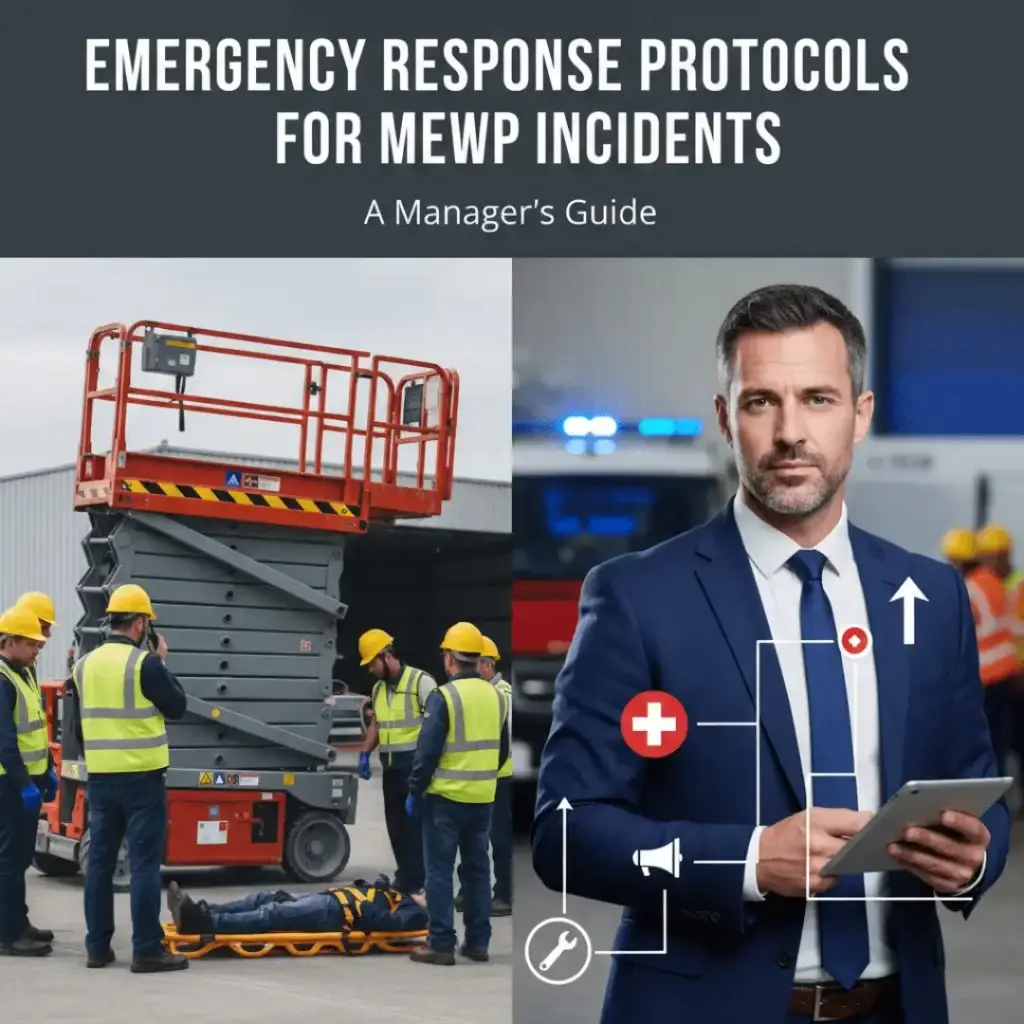
Mobile Elevating Work Platforms (MEWPs) such as scissor lifts, boom lifts, and vertical masts are indispensable for modern construction and maintenance operations. Yet even with trained operators, incidents like entrapments, tip-overs, and electrical contact still occur.
According to the International Powered Access Federation (IPAF) 2024 Global Safety Report, nearly 31% of all reported MEWP-related incidents worldwide involved either entrapment or falls from height, both scenarios where prompt, well-coordinated rescue is critical.
For site managers, the ability to implement clear emergency response protocols isn’t just best practice; it’s a core duty under UAE occupational health and safety regulations. That’s where the MEWP for Managers course, accredited by IPAF, becomes essential. It equips managers with the insight and confidence to handle emergencies efficiently, ensuring the safety of their teams and the continuity of operations.
Understanding the Risks Before They Escalate
MEWP incidents can unfold quickly — a simple misjudgment in platform reach or ground stability can have severe consequences. Common emergencies include operator entrapment against overhead structures, sudden machine malfunctions, or loss of stability on uneven terrain.
The key for managers is anticipation. Before work begins, they must ensure risk assessments are carried out, ground conditions are verified, and emergency descent procedures are understood by both operators and spotters. Managers who have completed the IPAF MEWPs for Managers course are better equipped to foresee such hazards and plan mitigations early, reducing both human and financial risk.
Developing a Site-Specific Emergency Plan
An effective emergency response starts long before an incident happens. Every MEWP operation should have a written rescue plan that outlines how to react in the event of equipment failure, operator distress, or environmental hazards like strong wind or power line contact.
A solid plan includes clearly assigned roles, designated responders, and communication steps. Managers should confirm that all team members know how to activate ground controls, operate emergency descent systems, and contact emergency services.
During an actual event, the first rule is the safety of the rescuer. Managers must ensure that the scene is stable before initiating any rescue, isolating nearby machinery, clearing the area of hazards, and maintaining constant communication with both the operator and rescue personnel.
Coordinating an Effective Response
When a MEWP emergency occurs, calm coordination is crucial. Managers should activate the pre-defined rescue procedure immediately, using the safest available method to lower the platform, typically through ground controls or an auxiliary lowering system.
If there’s electrical involvement, no one should approach the platform until confirmation that the power source has been isolated. Entrapment cases demand particular care: forcing a rescue without proper assessment can worsen injuries. Emergency services should be alerted immediately, and first aid should only be administered once the area is confirmed safe.
Post-incident, the MEWP should be isolated, inspected, and documented for investigation before being returned to service. This process not only ensures compliance but also helps refine future rescue protocols.
Training and Competence: The Manager’s Core Responsibility
Preparedness is only as strong as the competence of the team leading it. That’s why investing in specialized training, such as the IPAF MEWPs for Managers program, is vital.
This globally recognized course helps managers understand:
- The operational and emergency characteristics of MEWPs.
- How to assess rescue plans and verify compliance.
- Their legal responsibilities under UAE and international health and safety laws.
The program blends theory with real-world case studies, helping managers recognize common mistakes that lead to accidents and how to respond decisively under pressure. As of 2024, IPAF reports that more than 180,000 professionals worldwide have completed this course, highlighting its growing role in global safety standards.
Building a Culture of Emergency Readiness
Emergency response is not a checklist; it’s a culture. Managers should conduct regular drills to reinforce protocols, review rescue plans every few months, and ensure all MEWP operators maintain valid certifications.
In environments like the UAE, where construction projects often run on tight schedules and high temperatures, complacency can be costly. A strong safety culture led by informed managers ensures that emergency response remains proactive rather than reactive.
Leadership in these moments isn’t about authority; it’s about readiness. When managers know the correct steps and have trained teams to act swiftly, incidents are contained faster, injuries are minimized, and operations recover sooner.
Conclusion: From Compliance to Confidence
In any MEWP emergency, time and clarity are the difference between a safe recovery and a serious injury. For managers, leading that response begins with the right knowledge and preparation.
Enrolling in a MEWP for Managers course, particularly the IPAF MEWPs for Managers certification empowers you to build safer systems, supervise with confidence, and ensure your teams are ready for any emergency.


