Lifting operations in UAE projects need clear responsibility. One person may plan the lift. Another may supervise the lift on site. Others may handle rigging, signalling, inspection, and equipment checks. When these roles are blurred, the risk goes up fast.
That is why professionals often compare LEEA Courses in Dubai before choosing the right pathway. Two common options are Lifting Supervisor training and Appointed Person training. Both are connected to safe lifting operations, but they are not interchangeable.
The simple difference is this: the Appointed Person is responsible for planning and controlling the safe system of work, while the Lifting Supervisor focuses on supervising the actual lifting activity on site.
What an Appointed Person Does
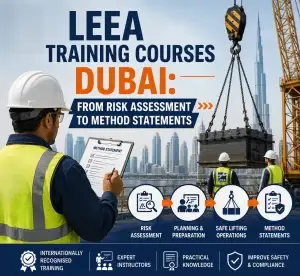
The Appointed Person role is more planning-heavy. This professional is expected to understand the lift, assess risk, select the right equipment approach, prepare or review lifting plans, and make sure the method statement is suitable before the operation begins.
The Appointed Person needs to understand crane capacity, ground conditions, load weight, lifting accessories, communication arrangements, exclusion zones, responsibilities, documentation, and emergency considerations.
Arbrit Safety’s LEEA Appointed Person course is structured around understanding the role and responsibilities of the Appointed Person, safe systems of work, risk assessments, method statements, crane appreciation, documentation, lifting accessories, communication, and lift planning.
What a Lifting Supervisor Does
The Lifting Supervisor is more site-execution focused. This role supports the safe delivery of the lifting operation once the plan has been approved. The supervisor checks that the team follows the lift plan, the area is controlled, communication is clear, and unsafe changes are not ignored.
A good Lifting Supervisor should understand site conditions, equipment readiness, team coordination, toolbox talks, exclusion zones, lifting accessories, rigging arrangements, crane movement, and stop-work situations.
In plain terms, the Appointed Person plans the lift properly. The Lifting Supervisor makes sure the site does not turn that plan into interpretive dance with a crane.
Which Course Should You Choose?
If your role involves preparing lift plans, writing or approving risk assessments and method statements, checking crane selection, or taking higher responsibility for complex lifts, Appointed Person training is usually the better fit.
If your role involves managing lifting activity on site, coordinating crane operators and riggers, checking controls, and making sure the approved lift plan is followed, Lifting Supervisor training is more relevant.
For larger UAE projects, both roles may be required. The Appointed Person sets the safe system. The Lifting Supervisor controls the execution. Trying to make one person cover everything without competence is not efficiency. It is just a faster way to create risk.
Why LEEA Matters in UAE Projects
LEEA is an internationally recognised body for lifting equipment and related training. It offers training linked to the inspection and thorough examination of lifting equipment, while accredited training providers deliver approved programmes for industry professionals.
This matters in UAE sectors where lifting is routine and high-risk, such as construction, oil and gas, infrastructure, marine, logistics, manufacturing, utilities, and heavy industrial projects.
Choosing the right LEEA Courses in Dubai helps professionals match training to responsibility instead of collecting certificates that look impressive but do not fit the job.
Choose the Right LEEA Pathway with Arbrit Safety
Arbrit Safety is listed by LEEA as offering Appointed Person for Lifting Operations, Crane Lift Supervisor, and Rigging and Lifting training, with Appointed Person listed as 5 days and Crane Lift Supervisor as 3 days. For UAE professionals comparing LEEA Courses in Dubai, Arbrit Safety helps learners choose the course that matches their actual lifting responsibilities, so projects can be planned, supervised, and executed with clearer accountability and stronger safety control.